

LUFTHANSA CHOOSES PAPERWISE
Contributing positively to a better world by choosing sustainable packaging. Lufthansa aims to make aviation more sustainable and be fully CO2-neutral by 2050. In its search for sustainable solutions, Lufthansa ultimately chose ‘in-flight’ PaperWise packaging made from agricultural waste. Both companies have found common ground in their mission to achieve sustainability goals, increase social awareness, and reduce CO2 emissions. Which packaging solutions have been developed? How did this process unfold? And what sustainability results has this yielded?
SUSTAINABILITY WITHIN AVIATION
The global population has now surpassed the 8 billion mark. Transporting people and goods across the world provides economic and social benefits, but simultaneously has negative environmental effects. According to calculations, aviation is responsible for approximately 2.5% of global CO2 emissions, contributing significantly to global warming. Airlines, supply chain partners, and governments are becoming increasingly aware of this environmental impact. Therefore, sustainable solutions are being sought to reduce emissions in this sector. Lufthansa—one of the largest airlines in Europe—is taking its responsibility here. “We believe that sustainable aviation will continue to enable us to benefit from a connected world,” says Lufthansa.
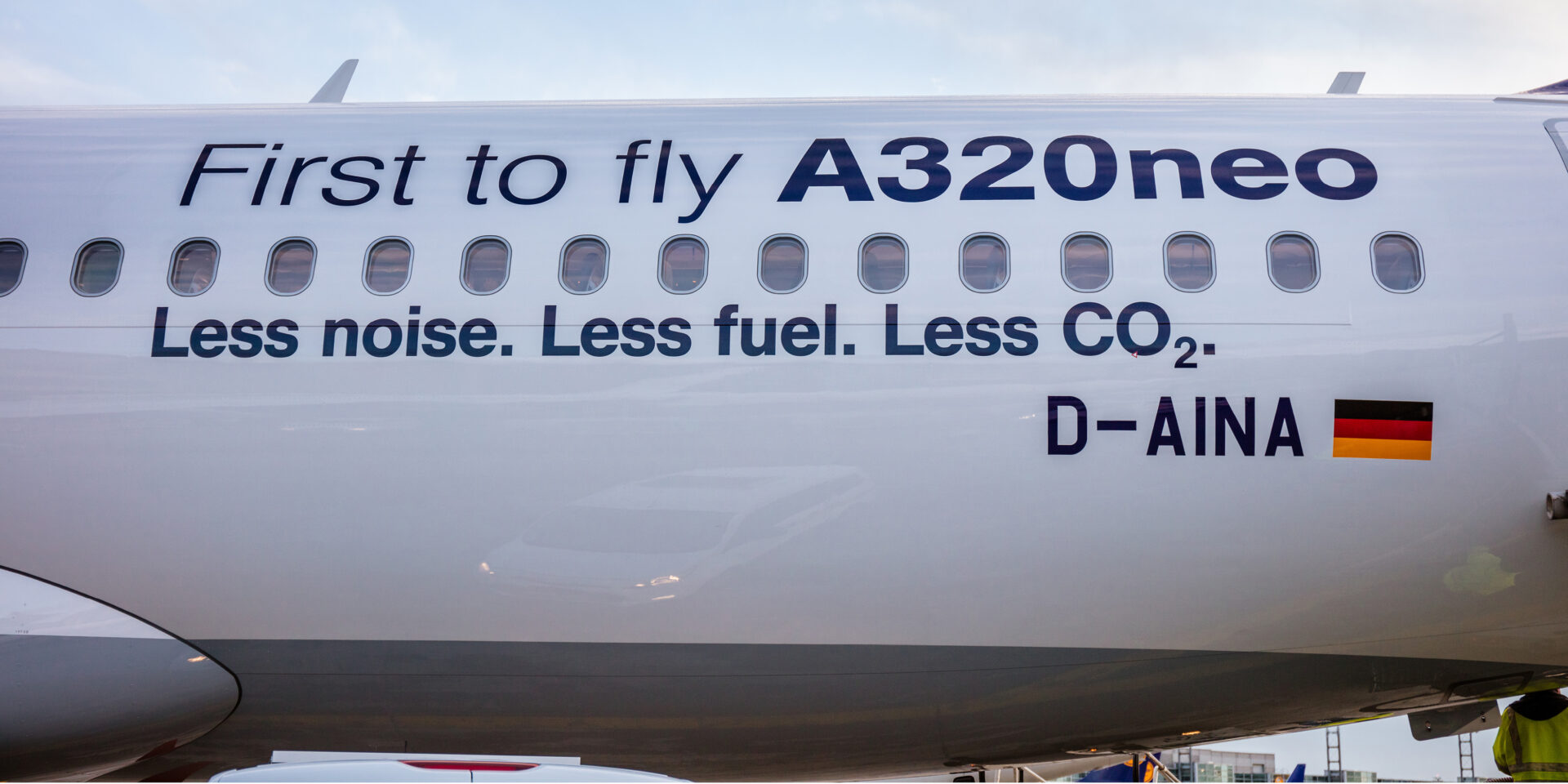
LUFTHANSA GROUP
Lufthansa was established in 1926 and has now existed for nearly a century! In 2019, before the outbreak of the Corona pandemic, the Lufthansa Group transported more than 145 million passengers in a single year. While the general public knows Lufthansa for its passenger flights, it also encompasses other activities including cargo transport, aircraft maintenance, and catering.
LUFTHANSA: CO2 NEUTRALITY BY 2050
“We connect people, cultures, and economies across the world – and that is exactly what we want to continue doing in the future with a clear conscience,” says Lufthansa. As one of the major players in aviation, Lufthansa has a distinct goal: to lead aviation toward a sustainable future and be CO2-neutral by 2050. This means Lufthansa is making a commitment to evaluate, reduce, and offset the CO2 emissions produced.
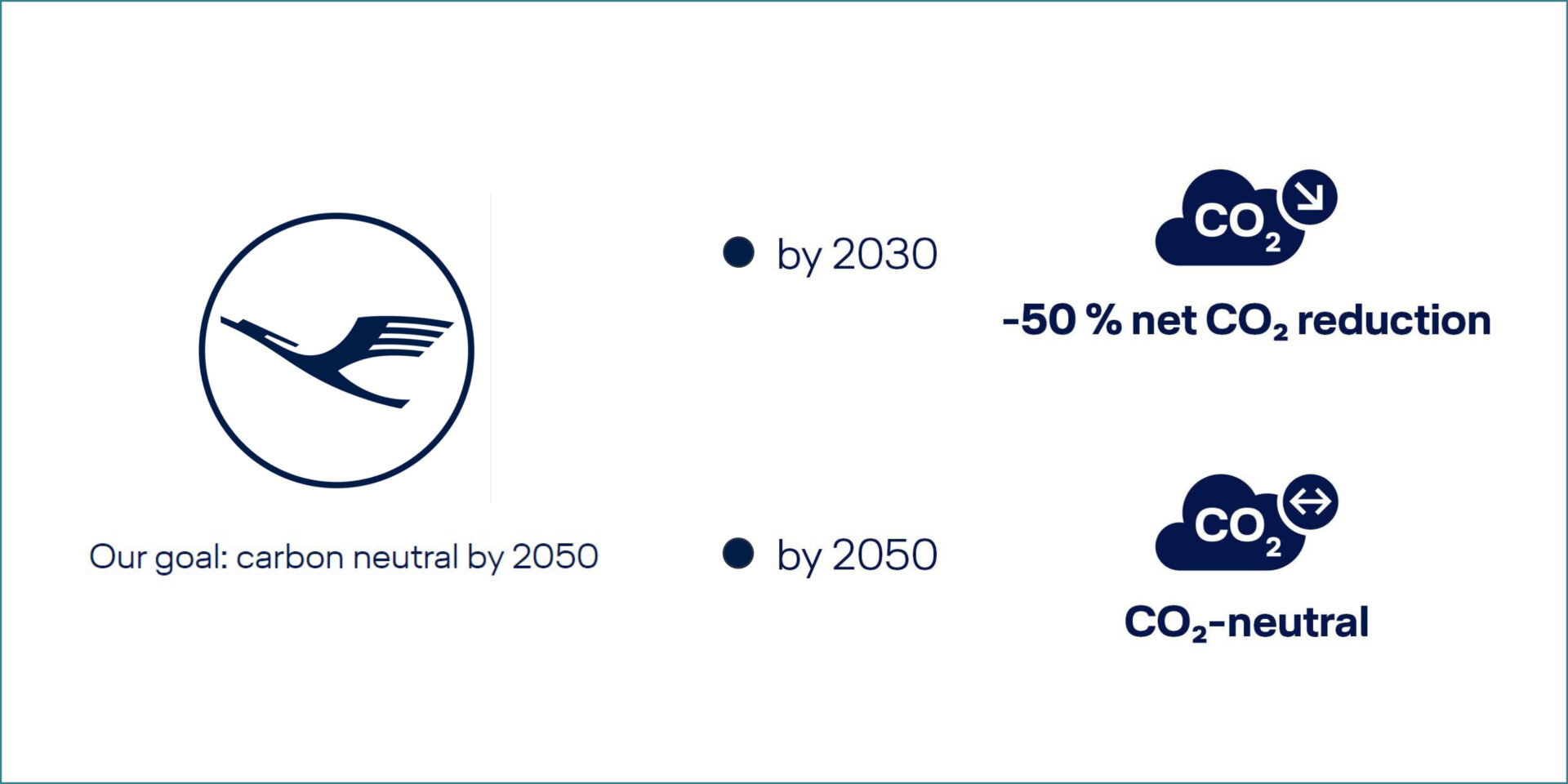
“To achieve CO2 neutrality, Lufthansa has rolled out a number of initiatives;
A fuel-efficient fleet must reduce kerosene consumption and thus CO2 emissions per flight by 30%. Fossil fuels must be replaced with sustainable alternatives (Sustainable Aviation Fuel). Ground processes and flight routes are being optimized, leading to greater efficiency in flight operations. Through Lufthansa’s Compensaid platform, passengers can offset their CO2 emissions with long-term climate protection projects. Through partnerships with other transport companies, Lufthansa hubs are becoming accessible via alternative, more environmentally friendly transport options. And ‘single-use plastics’ are being replaced by sustainable materials. In 2019, more than 370 million ‘single-use plastics’ were used on board the Lufthansa Group fleet. These are packaging items, often made of plastic, that are used only once and carry a high environmental impact. This needs to change!
LUFTHANSA CHOOSES PAPERWISE
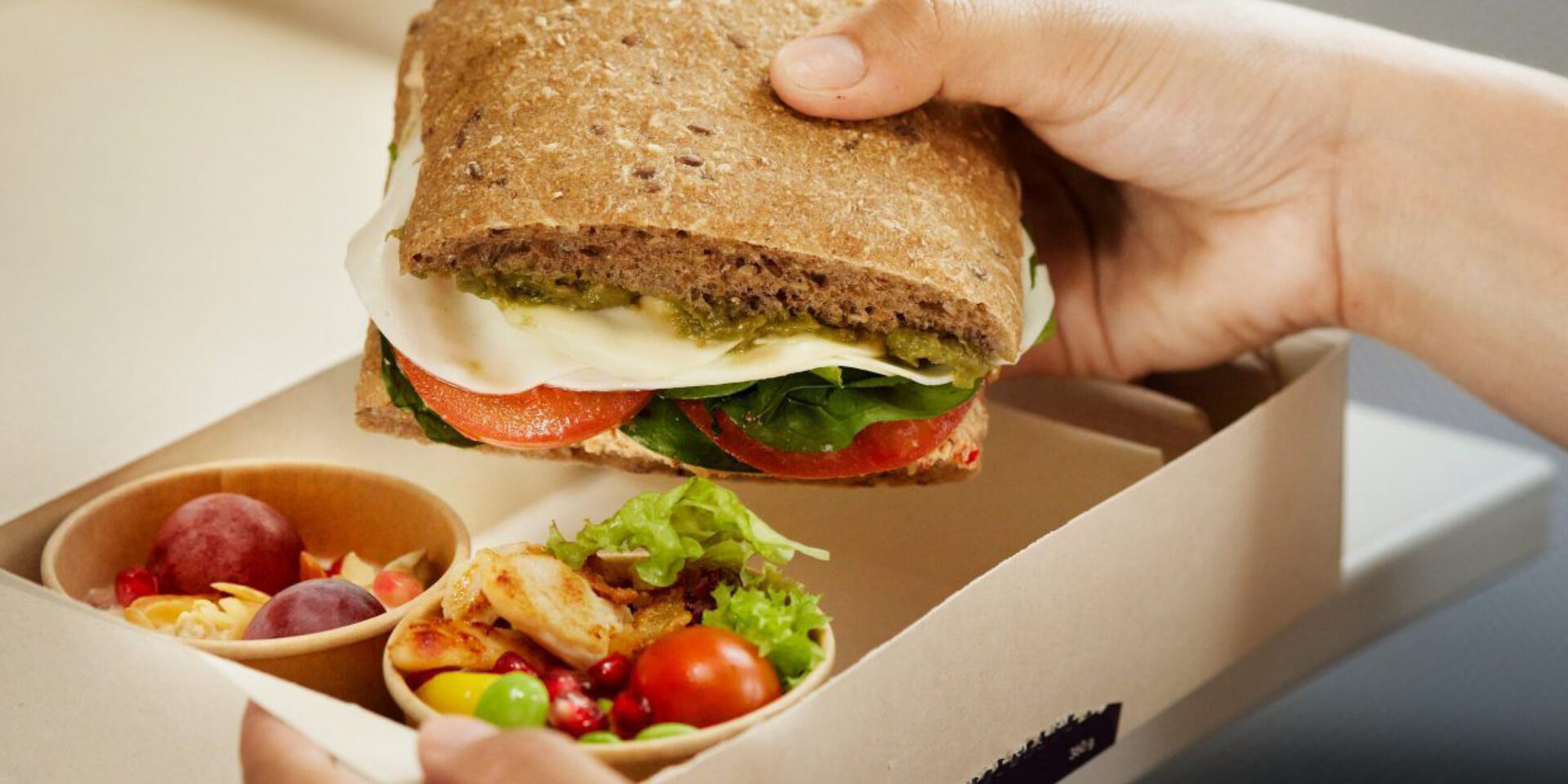
‘Single-use plastics’ include disposable packaging used for catering during flights. Think of cups and cutlery, but also the packaging for sandwiches, wraps, and salads. The production of plastic requires oil-based raw materials, significant energy, and labor, and is responsible for high CO2 emissions and other greenhouse gases. This group of packaging is also referred to as disposables and is usually used only once before being discarded. By choosing packaging made from environmentally friendly raw materials, significant environmental savings are achieved and CO2 emissions are avoided.
Therefore, Lufthansa has renewed its ‘Onboard Delights’ program, placing great emphasis on selecting packaging made from environmentally responsible raw materials. Packaging made from petroleum-based plastics must make way for recycled and/or compostable materials. By 2025, Lufthansa aims to have all ‘single-use plastics’ on board completely removed or exchanged for sustainable alternatives. Hello sustainable packaging from PaperWise!
ENVIRONMENTAL GAIN THROUGH PAPERWISE
PaperWise is CO2-neutral paper and paperboard made from agricultural waste for packaging and printing. Tree-free and plastic-free. Good for our planet. The sustainable PaperWise packaging for Lufthansa is recyclable, compostable, and food-safe. They are made from 100 percent agricultural waste—stems and leaves left over after the harvest, which is a residual stream from farming. While plastic is (mostly) made from primary raw materials, agricultural waste is a secondary raw material that becomes available annually. Forestry is also a primary raw material with growth times of 10 to 80 years. By creating packaging from PaperWise paperboard, trees are saved and agricultural waste is given a second life. This also means that this agricultural waste is no longer burned in power plants or in the open air. Not burning agricultural waste prevents significant CO2 emissions. Wise With Waste!
But there is more. Since 2021, PaperWise has been fully CO2-neutral. PaperWise is produced with as little energy as possible and, where possible, with green energy. However, CO2 emissions still occur. Consider the tractors on the fields, the trucks, trains, and ships required for the transport of raw materials and paper. Not all of these yet run on green energy. PaperWise calculates its CO2 emissions across the entire chain and offsets this (via Gold Standard and GoodShipping).
PLASTIC-FREE PACKAGING FROM AGRICULTURAL WASTE
Lufthansa’s search for sustainable disposable packaging did not happen overnight. De Ster (a supplier of innovative packaging and service concepts for the aviation and foodservice industry) is the initiator and driver of this project. Sustainability is one of the most important focal points. In addition, several other factors are important when choosing disposable packaging, such as food safety, sturdiness, lightweight properties, grease resistance, appearance, quality, and appropriate presentation.
Naturally, the packaging must be certified for food safety and be of high quality. Some food products contain fats that can penetrate through packaging. The packaging material must be resistant to this. Space and weight are important criteria on board, so the packaging must also be light and compact. At the same time, it must be sturdy enough to protect the contents during transport. Appearance is also important; the packaging and the product must contribute to the presentation of the meals and the image of Lufthansa. There is a strong preference for packaging that underlines the sustainable character in its look and feel.
In its search for sustainable disposable packaging, the product innovation team at De Ster arrived at PaperWise. The unbleached PaperWise Natural Grease Resistant paperboard, made from 100% agricultural waste, meets all requirements and, with its light brown natural color, also provides the perfect appearance.
PROCESS: SUSTAINABLE PACKAGING PROJECT
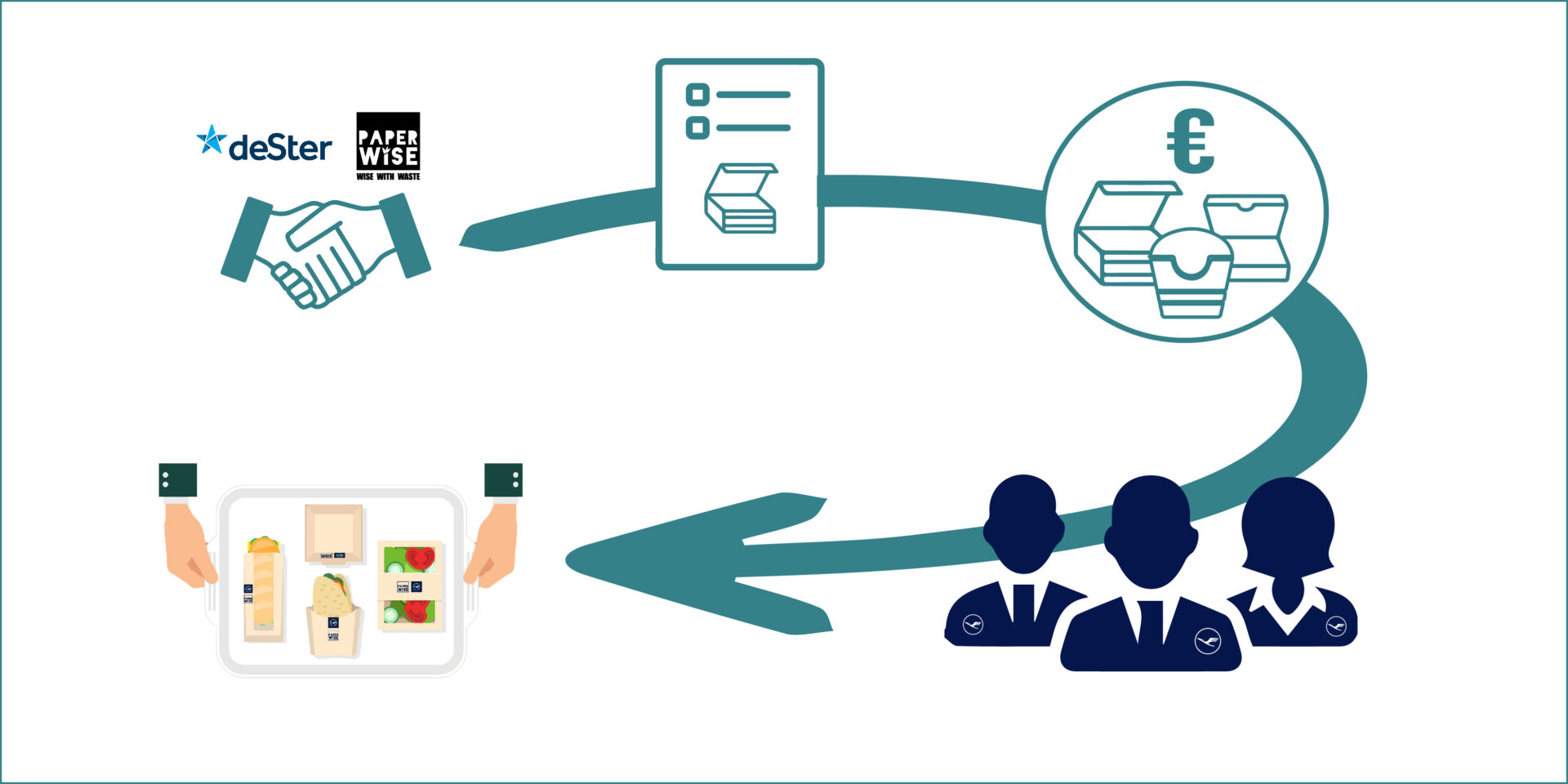
After the initial introduction between De Ster and PaperWise, there was enthusiasm on both sides regarding the potential collaboration. The next step involved the inventory phase of all existing Lufthansa ‘in-flight’ catering packaging. Which catering packaging and disposables are used on board? From which raw materials were the “old” packaging made? What are the annual volumes for each type of packaging? Who are the current suppliers? Which PaperWise paperboard types could replace the “old” packaging? Which manufacturers could produce this packaging? What will the prices of the packaging be?
Data was collected from both sides (De Ster and PaperWise) and compiled into an Excel file. With this information, De Ster approached its existing and new suppliers. Demo models were designed and created for all ‘in-flight’ catering packaging, and quotes were requested. This allowed for a comparison of quality, appearance, sturdiness, processability, and prices. Parallel to this phase, De Ster purchased a minimum quantity of all PaperWise paperboard types and versions. This enabled the product innovation team at De Ster to conduct their own product tests.
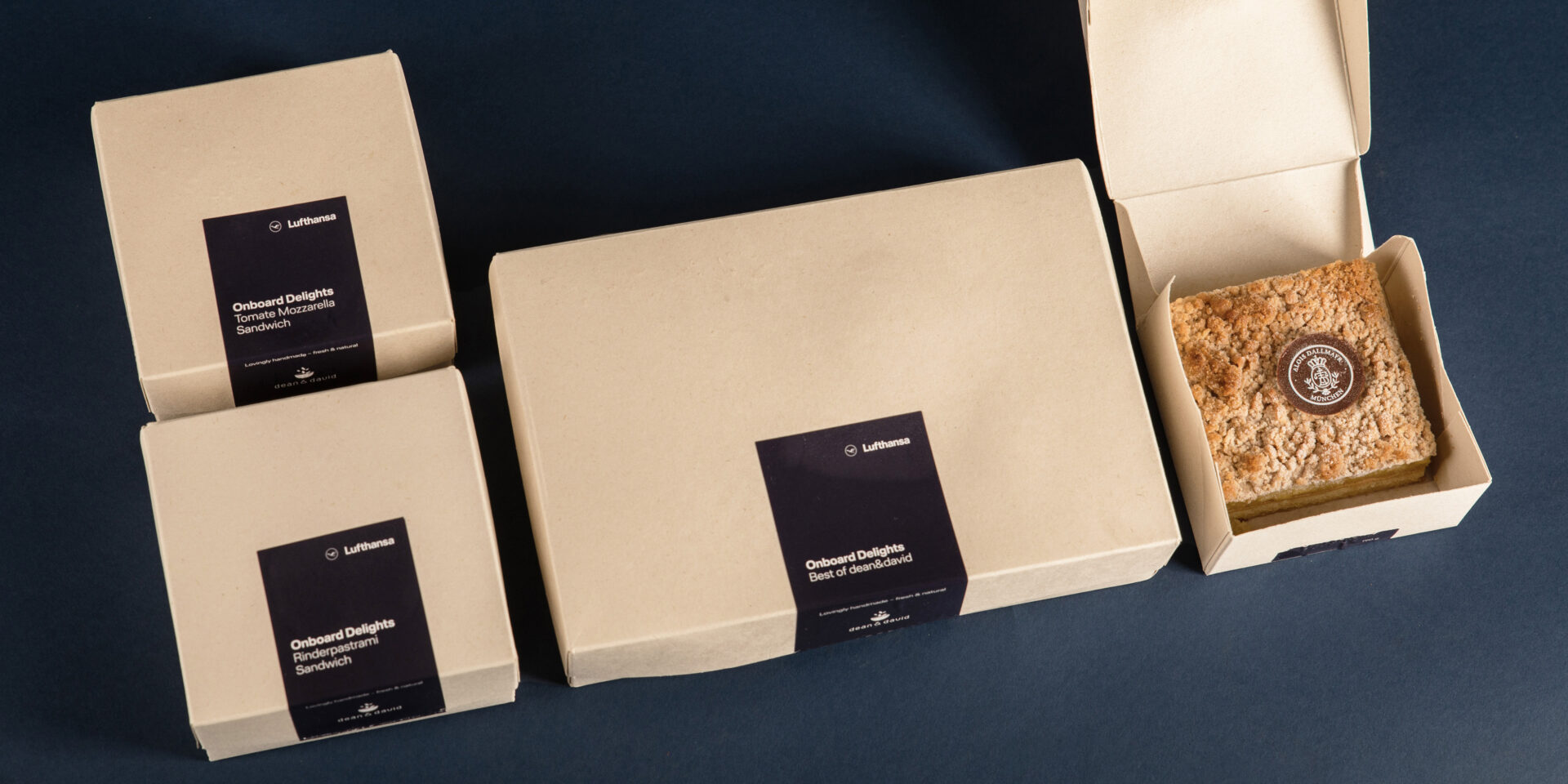
All findings, demo models, and prices were presented to the Lufthansa ‘in-flight’ catering team, after which the final choices were made. The next step was the try-out phase. Several tens of thousands of versions of all packaging were produced and tested on various continental and intercontinental Lufthansa flights. Based on this large-scale practical test, final adjustments were made to the packaging designs. The Lufthansa ‘in-flight’ PaperWise range now consists of sustainable PaperWise packaging for sandwiches, apple strudel, cake, salads, and wraps.
Lufthansa, De Ster, and PaperWise are proud of their collaboration and the result: a complete line of environmentally friendly disposable packaging as part of the renewed Lufthansa ‘Onboard Delights’ program. Adopting PaperWise is a significant step in sustainability efforts within the aviation industry.
THE COMMUNICATION CONCEPT AND ENVIRONMENTAL IMPACT
The collaboration went beyond just the packaging. Taking concrete steps in the field of sustainability is important. Communicating about sustainability to employees, passengers, and other stakeholders is just as vital. Sharing this information promotes transparency and strengthens engagement and understanding of Lufthansa’s vision and mission. It makes it clear why Lufthansa makes certain choices and what it aims to achieve. The Lufthansa Group has tens of thousands of employees, many of whom are in direct contact with more than 100 million passengers annually. How do you tell the story of CO2-neutral paperboard made from agricultural waste? What are the best communication tools and channels? Therefore, in their collaboration, Lufthansa and PaperWise developed a communication concept regarding sustainability consisting of several components:
1. Info video
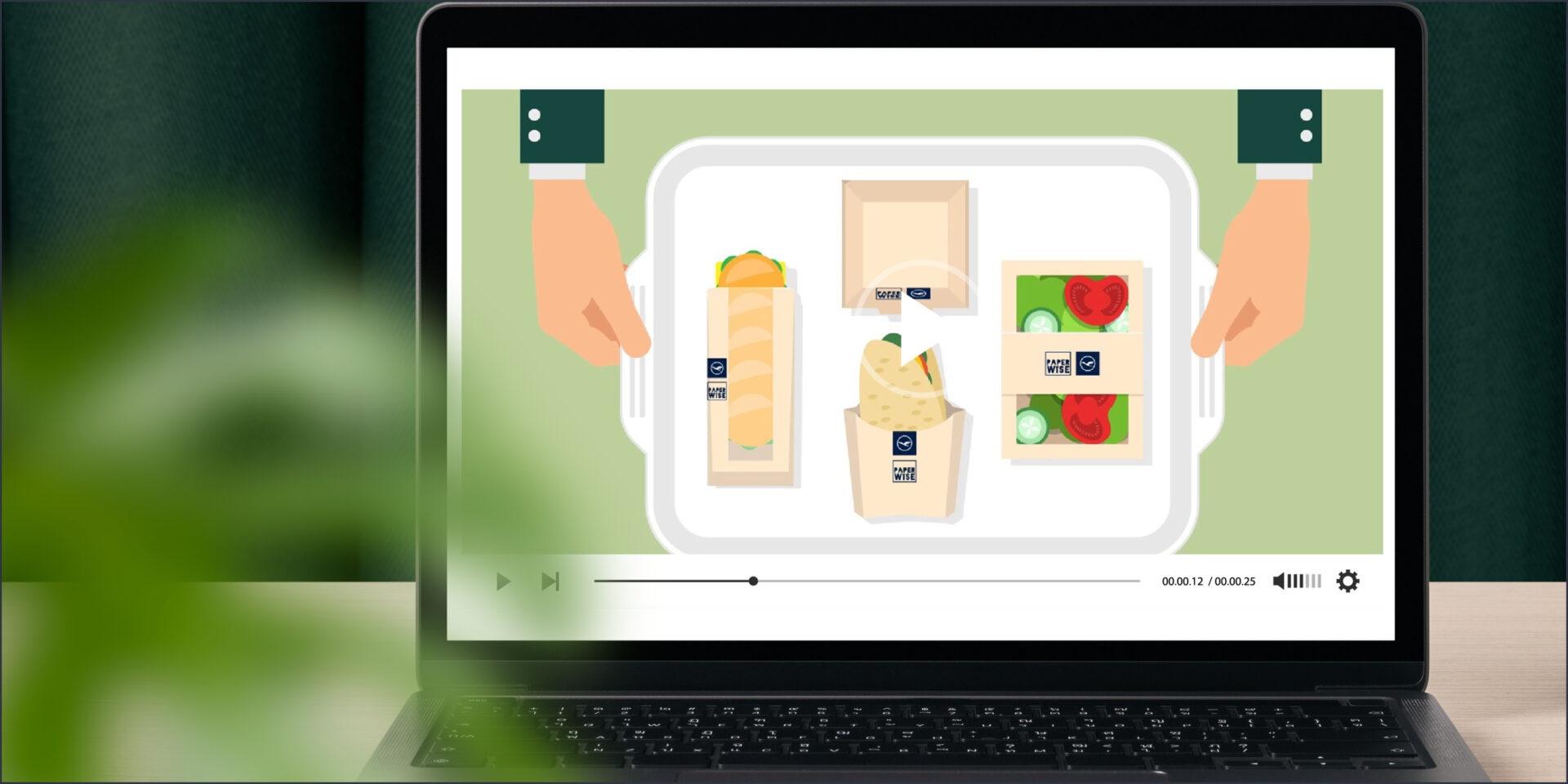
Lufthansa wanted to inform all employees about the sustainable choice for PaperWise and explain what PaperWise is. To this end, PaperWise created a video that reveals the benefits and differences of PaperWise compared to paperboard from trees in 20 seconds. This info video was distributed among Lufthansa staff with the message that additional information about PaperWise is easily accessible by scanning the QR code in the ‘Onboard Delights’ brochure. Since all flight attendants were also informed in this way, they can, in turn, inform passengers on board if they have questions about PaperWise.
2. PaperWise Logo
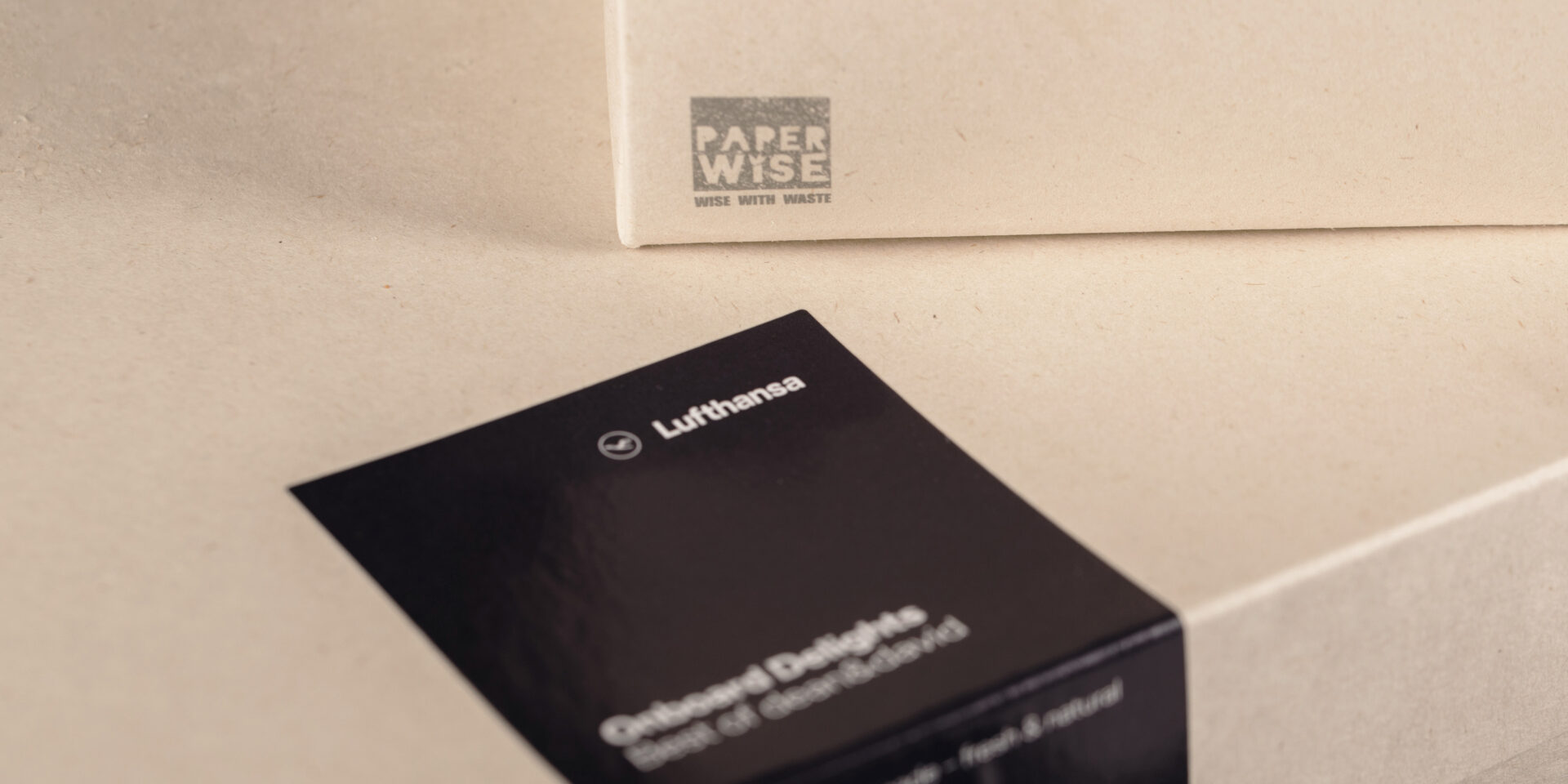
On all ‘in-flight’ catering packaging made from PaperWise, the PaperWise ‘on product’ logo is printed as a mark of quality. This logo makes it clear to passengers that the packaging is made from PaperWise and ensures recognition. The sustainable origin of PaperWise strengthens the trust of passengers and employees in Lufthansa’s sustainability policy, leading to extra awareness and stimulating sustainable thinking.
3. Onboard Delights leaflet and brochure
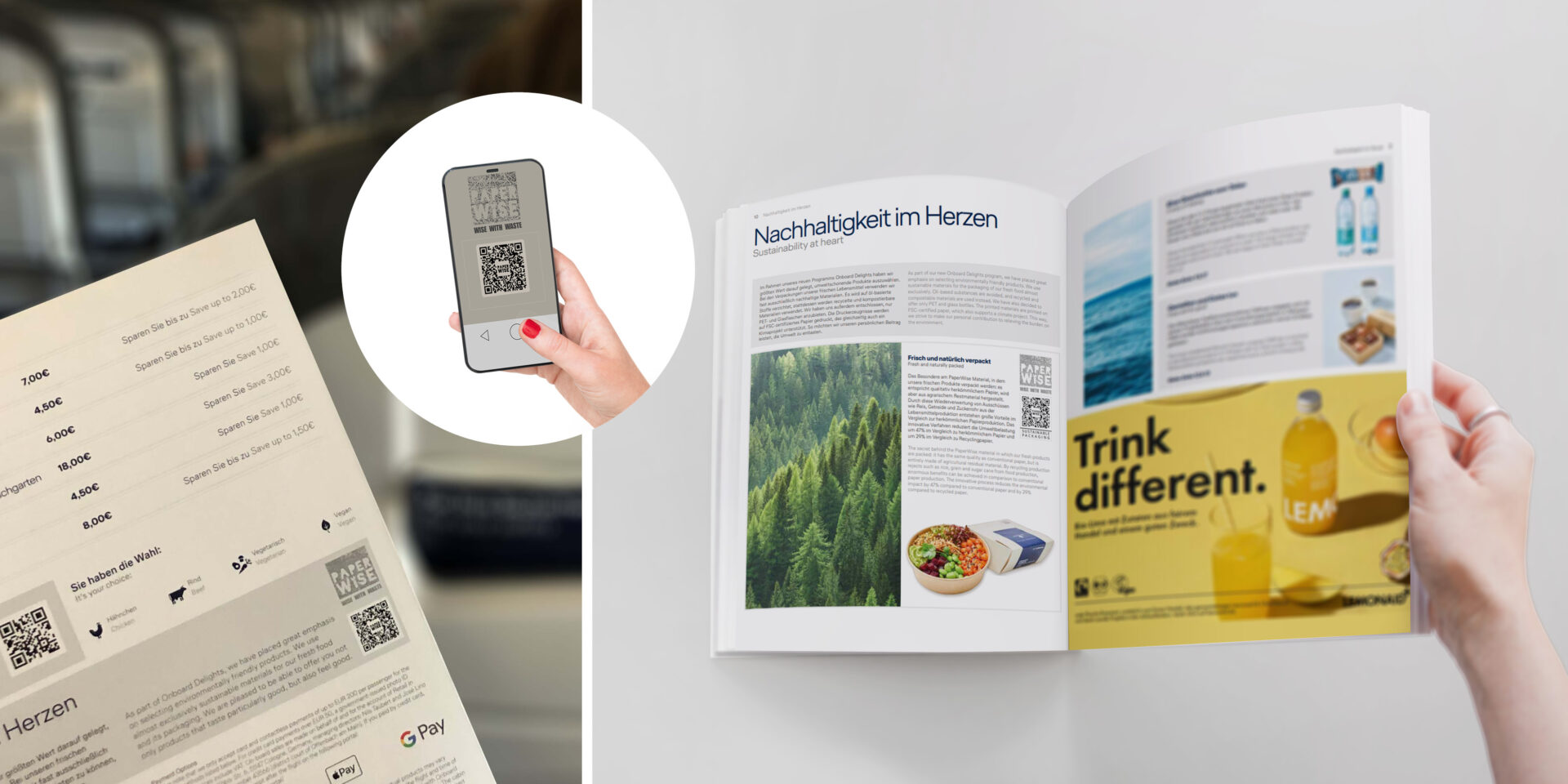
The range of food and drinks available during the flight can be found in the ‘Onboard Delights’ leaflets and brochures provided at every seat. These leaflets and brochures feature a short article about Lufthansa’s choice for sustainability and PaperWise. Under the title ‘Sustainability at heart,’ passengers are invited to read more about sustainability. If a passenger wants even more information, they can easily do so by scanning the unique QR code provided by PaperWise for Lufthansa. Explaining Lufthansa’s sustainable choice for environmentally friendly catering packaging strengthens passenger confidence in Lufthansa’s sustainability policy.
4. ENVIRONMENTAL SAVINGS IN FIGURES
Clear explanations and insightful figures. PaperWise helped Lufthansa visualize the environmental savings associated with Lufthansa’s choice for packaging made from PaperWise paperboard. These results and the sources from which the calculations were derived have been compiled into a document used by Lufthansa as a reference and internal communication tool. As an example of an annual result:
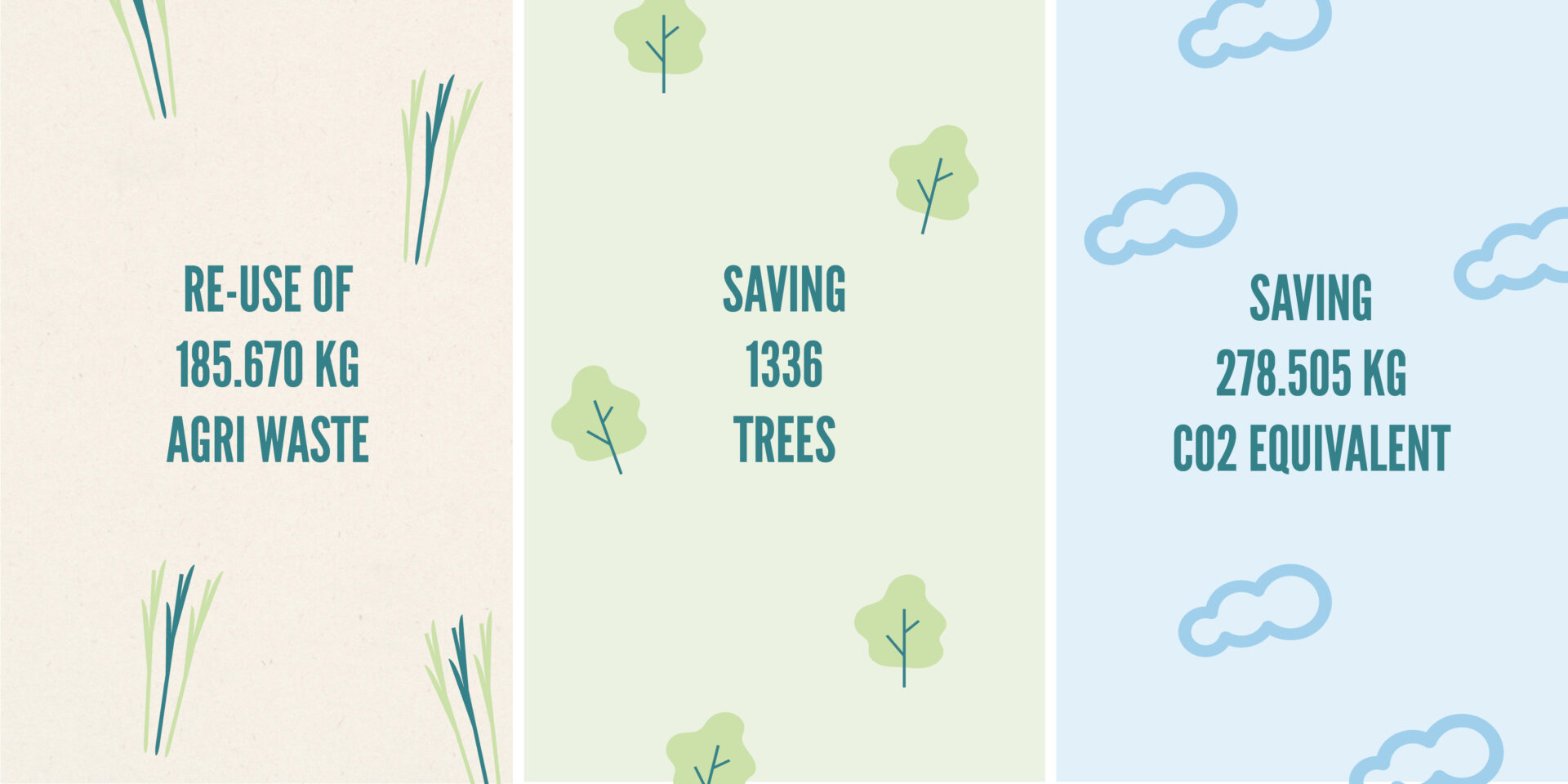
In 2021, Lufthansa gave 185,670 kg of agricultural waste a second life
This saved 278,505 kg of CO2-eq. by not burning agricultural waste in the open air
This amount of CO2-eq. is equivalent to 2,282,822 km of driving
Thanks to Lufthansa, 1,336 trees were not cut down
18.6 hectares of deforestation were prevented. This corresponds to 19.5 football fields
By using PaperWise, Lufthansa also helps improve the conditions of local communities in developing countries where PaperWise is produced. Environmentally friendly and socially responsible. Wise With Waste!
MAY WE ALSO HELP YOU ON YOUR JOURNEY TO SUSTAINABILITY?
How we can preserve our earth affects us all. Whether you work for a large corporation, a small to medium-sized enterprise, or as an independent entrepreneur. Every choice in the right direction helps. Do you also want to leave the world a little more beautiful for the generations after us and reduce your company’s environmental impact? At the same time, do you want to increase awareness among your employees and business relations? Then we might be a good match. PaperWise would be happy to engage in a conversation with you without obligation.
CURIOUS? EXPERIENCE AND TEST:
Would you like more information, a conversation with PaperWise, or are you looking for paper and paperboard samples in A4 format? Please contact us via the button below, or share this story via one of your social media channels.