

Sustainability: How to approach it? PaperWise uses SDGs as a guiding principle
The Sustainable Development Goals (SDGs) are five years old this year, and we are raising a toast to that! But what are the SDGs? How can I use the SDGs within my organization? Which SDG applies to my organization? These are all questions related to sustainability. Would you like to know how we at PaperWise use the Sustainable Development Goals as a guide for our sustainability policy?
When we started PaperWise, we knew one thing for certain: as a company, we wanted to make a positive contribution to a better world. A future-proof world where our own children, grandchildren, and all subsequent generations can enjoy the natural beauty and biodiversity that the Earth currently offers us, just as we do. We also knew that the paper sector is already very sustainable, yet we still saw plenty of room to take corporate social responsibility to an even higher level. We use the SDGs in our policy and strategic decisions as a compass for determining the future of the organization.
SDG is the abbreviation for the United Nations’ Sustainable Development Goals. The United Nations (UN) was founded in 1945, at the end of the Second World War. The aim of this organization is to connect all 193 member countries, enabling them to consult, negotiate, and reach compromises that benefit everyone. The four main areas of focus are:
• The promotion of international peace and security.
• The development of friendly relations between countries.
• Cooperation in solving international problems.
• Promoting respect for human rights.
Within the framework of these focus areas, the Sustainable Development Goals were launched in 2015. Global goals for sustainable development. Worldwide, the political leaders of all 193 member countries signed the 2030 Agenda for Sustainable Development, which describes 17 sustainability goals. These goals call on countries, businesses, and individuals to take action to end poverty, protect the planet, and improve the lives and prospects of everyone, everywhere. An end to extreme poverty, inequality, injustice, and climate change. This is the core of the Sustainable Development Goals (SDGs). The 17 Sustainable Development Goals form the basis for the 2015-2030 agenda for global sustainable development.
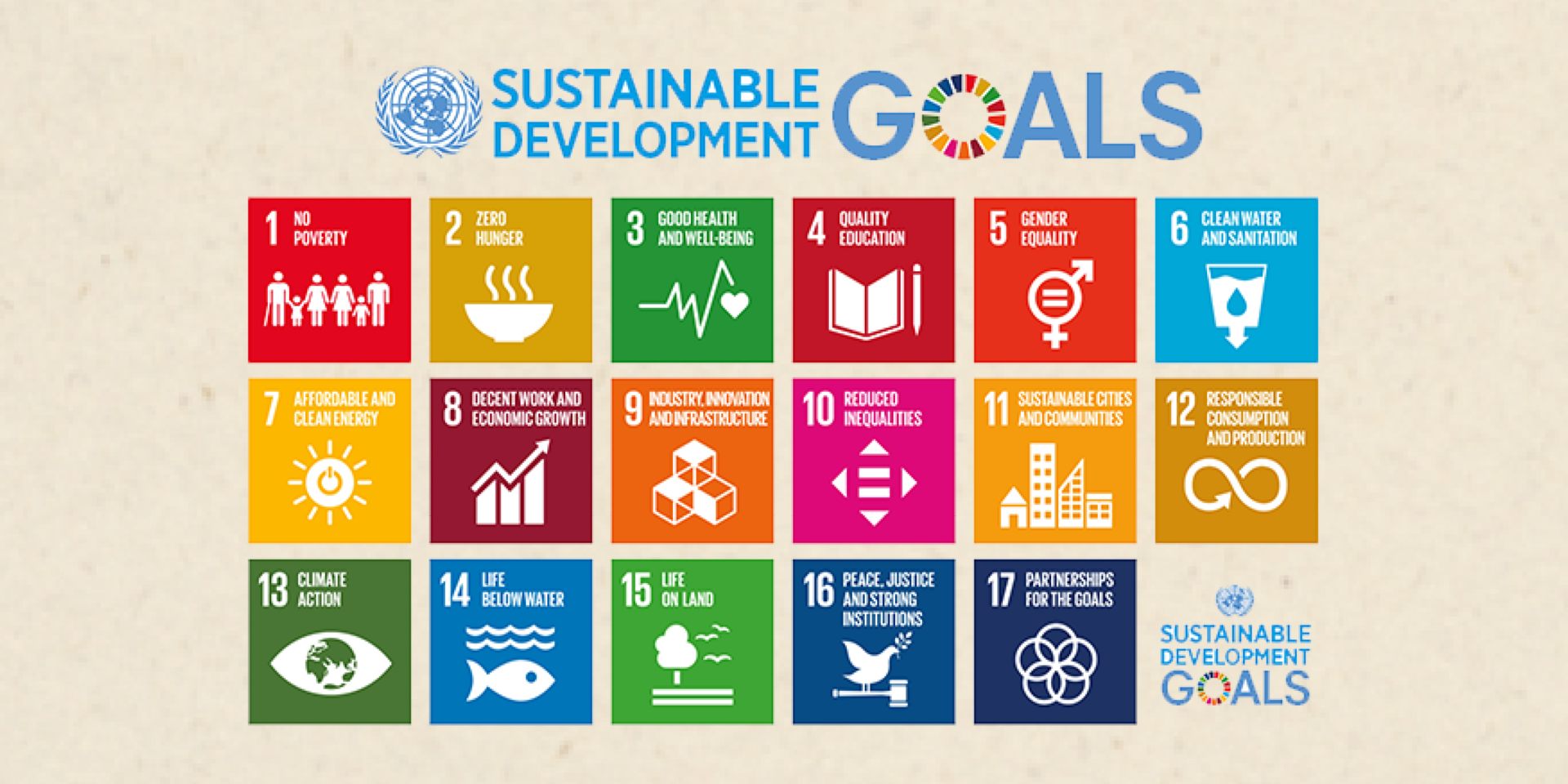
At PaperWise, we first immersed ourselves in the 17 SDGs. Which SDGs are there? What do the SDGs relate to? And how can our policy and strategy contribute as much as possible to the SDGs? At PaperWise, we do not focus on just a few SDGs; instead, we always consider all 17 SDG goals as a holistic whole during our strategic decisions. What is our direct and indirect influence on each SDG? Let us provide an example.
PaperWise is a Social Enterprise with the goal of making a positive contribution to a better world. We achieve this with paper and paperboard made from agricultural waste for printing, packaging, and office supplies. During the processing of crops such as rice, grain, corn, and sugarcane, 80% of the plant—in the form of stems and leaves (agricultural waste)—remains unused. Worldwide, billions of tons of agricultural waste become available annually, the vast majority of which is currently burned! This results in the loss of valuable raw materials, the release of unnecessary CO2, and environmental pollution of the soil and air. Hundreds of millions of small-scale farmers in developing countries with very low incomes only receive income for the food that grows on the plant, which is only 20% of the crop. It is our mission to upgrade as much agricultural waste as possible into environmentally friendly and socially responsible paper and paperboard. As a paper company, we lead by example, raise awareness, and inspire the market, the paper sector, and politics to take action and follow our idea, based on the following principles and conditions:
• the share of agricultural waste as a raw material in PaperWise must be as high as possible
• the quality of PaperWise paper and paperboard is high and consistent
• farmers receive a fair price for their agricultural waste
• supply chain partners continuously implement improvements that contribute positively to the SDGs
Only together can we grow the share of paper & paperboard made from agricultural waste. Good cooperation with various stakeholders is of great importance in this regard. As far as we are concerned, our standard for cooperation in the trade chain can be translated into four principles:
1. long-term cooperation
2. improving environmental impact, social impact, quality, efficiency, and productivity together
3. traceability and analysis of ingredients and raw materials
4. pay a fair price
By working in a fair and transparent manner, we strive for environmentally friendly, socially responsible paper & paperboard made from agricultural waste. By leading by example as a paper company, raising awareness, and encouraging the industry, politics, and consumers to change. Purchasing paper types with the lowest environmental impact and greatest social contribution plays a very important role in our pursuit of a paper industry where plant residues are seen as a valuable raw material for paper & paperboard.
Currently, we are reinvesting all profits back into the company to make PaperWise larger and more successful, thereby generating even more positive impact. In our policy, we have stated that, starting from a minimum amount, we will reinvest a portion of the profits into SDG projects in the regions where our production partners are located. With these investments, we can make a positive contribution to the other SDGs that we do not directly influence through our business. In this way, we can contribute positively to all 17 SDG goals.
Do you want to help create a circular economy? Do you want to contribute to less poverty, more biodiversity, and the reduction of climate change? Without compromising on quality! Then choose sustainable packaging and printing made from PaperWise paper and paperboard. Together, Wise With Waste.