

Which packaging is environmentally friendly?
Questions regarding the use of plastic packaging are being raised in the media with increasing frequency. Companies are now busy searching for responsible, sustainable, and environmentally friendly packaging as an alternative. What should you look for if the packaging needs to become responsible, sustainable, and more environmentally friendly?
No packaging
Now that environmental awareness and the impact of packaging on our environment have significantly increased, it is an excellent time for companies to re-examine a number of packaging questions. Which items do we pack? Why do we pack these items? And why did we choose that packaging at the time? The first gains for companies can be achieved by reducing oversized, excessive, or redundant packaging. This achieves both environmental benefits and cost reductions.
Sustainable packaging
Packaging will always exist. For logistical protection, extending the shelf life of the product, or simply to communicate the right message. A vast amount of packaging is made from plastic. The major advantage of plastic packaging is often the excellent price/quality ratio. Here, quality should be seen in the broadest sense of the word; properties, lifespan, applications, printing possibilities, etc. The disadvantage of plastic packaging is the enormous environmental pollution. (Litter) waste on land and in water causes major ecological problems and enormous social costs. Added to this is the fact that the raw material petroleum (the raw material for plastic) is finite and also causes significant environmental and social damage. The oil and plastics sectors have paid insufficient attention to these social problems and are now being penalized for this on a large scale. This explains the accelerated movement of companies to switch to sustainable packaging.
The right raw material
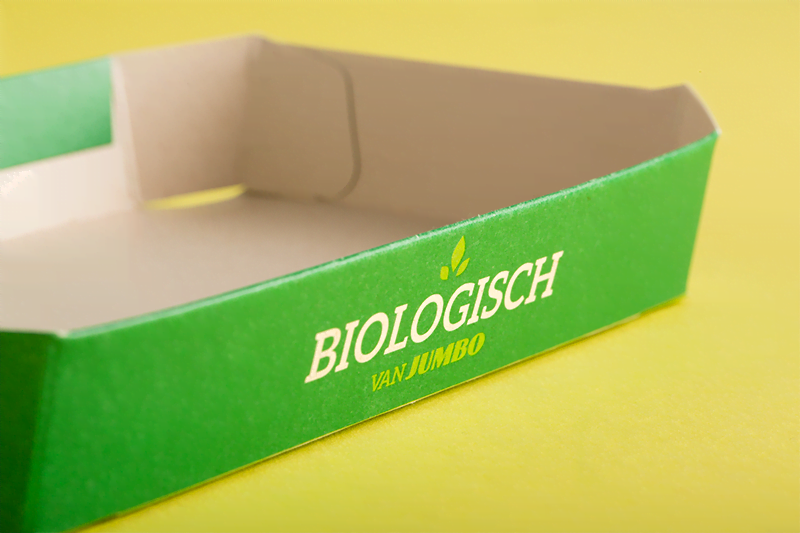
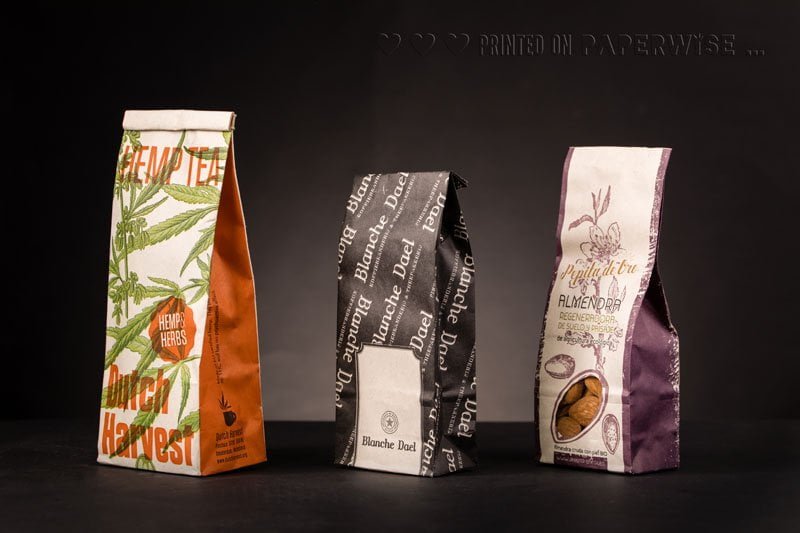
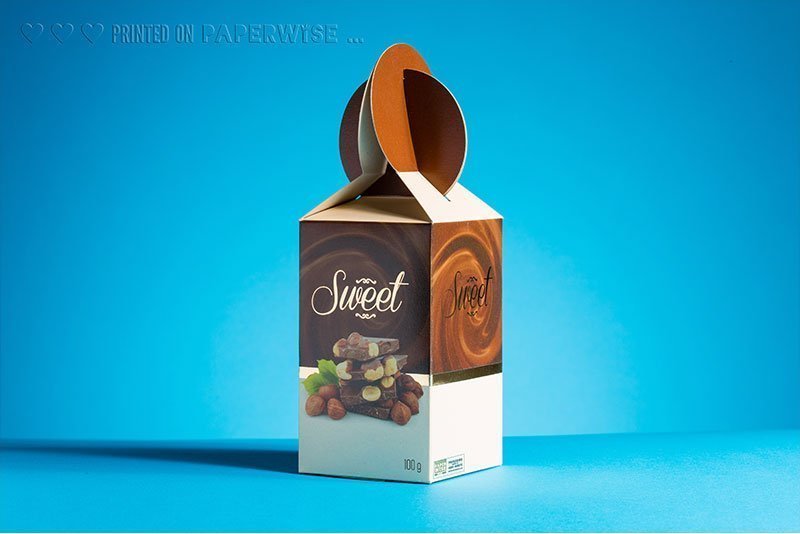
The raw material from which packaging is made is therefore of essential importance for the degree of sustainability and the image the consumer receives of sustainable packaging. Thousands of years older than plastic is the raw material paper. In the current zeitgeist, it is once again completely trendy and ready to compete with plastic packaging. Paper and paperboard naturally have a high tactile appeal. Consumers know that it is a natural product and suitable for recycling. In recent years, more and more types of paper and paperboard are also being certified for composting, something that will never be possible with plastic packaging made from petroleum.
Paper from agricultural waste
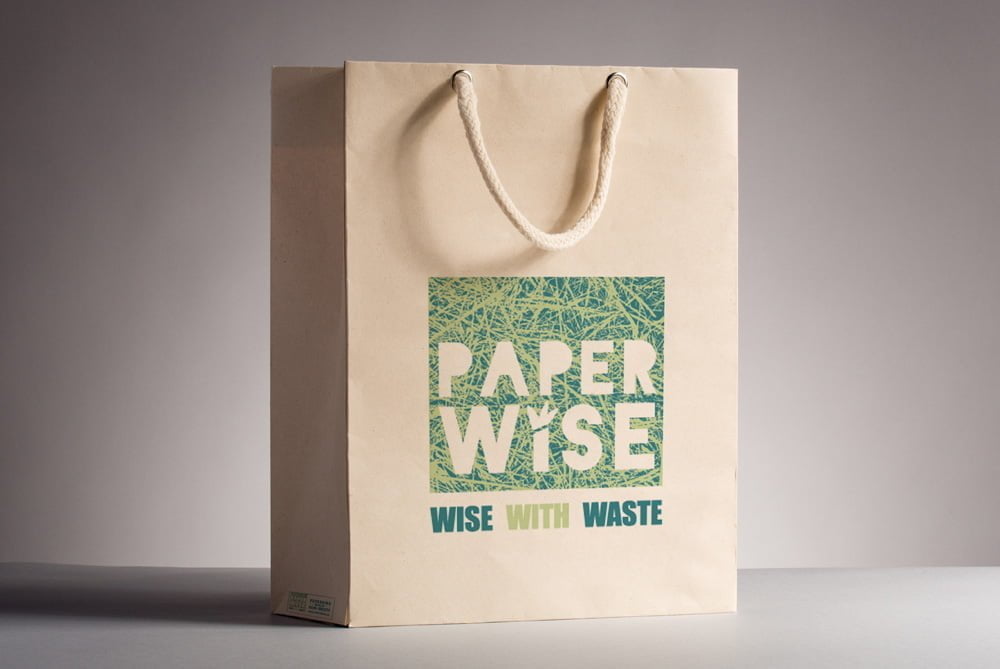
A wonderful innovation within the paper sector relates to the raw material. While we are used to paper being made from trees or waste paper, paper and paperboard made from agricultural waste now also exist! These are the stems and leaves that remain after the harvest of food crops such as rice, grain, sugar cane, etc. Worldwide, agricultural waste is currently burned, but that is no longer necessary. Two products come from the same plant and piece of land: food and the raw material for paper. The fast-growing company PaperWise is an organization that produces paper and paperboard from agricultural waste. Independent environmental research shows that the environmental impact of PaperWise is 47% lower than that of FSC paper made from trees and 29% lower than recycled paper. This is a great example for companies that want to reduce their ecological footprint and take concrete steps to make their packaging more sustainable. By doing so, your company directly contributes to the circular economy, as you give agricultural waste a second life.
Bio-plastic
More and more alternatives to plastic are also entering the market in the form of bio-plastics. This type of raw material differs from petroleum-based plastic. Bio-plastics are made from renewable raw materials such as agricultural crops and trees. Starch, lactic acid from sugars, and cellulose are the most commonly used raw materials for bio-plastics. The properties correspond very well with petroleum-based plastic. Applications range from flexible films to hard bio-plastic containers and are also suitable for packaging food products. Companies wishing to take steps in the field of sustainable packaging would do well to further explore the possibilities of bio-plastics.
Most sustainable packaging
There is therefore no single answer to the question of what the most sustainable packaging is. The starting point always lies with your own product. Protection, both logistically and in terms of shelf life, and communication are the most important properties for most companies. Naturally, the new sustainable packaging must also be easy and quick to process in the production area. Sustainable packaging is now completely in vogue. What are you waiting for? Say goodbye to your petroleum-based plastic packaging today!